Dropshipping in Kenya for Beginners in 2026 (Complete Step-by-Step Guide)

Dropshipping in Kenya is one of the most talked-about online business models in 2026 — and for good reason. It allows you to run a fully functioning e-commerce store, sell real products to real customers, and earn a profit margin on every sale without ever touching, stocking, or shipping a single item yourself.
If you have been looking for a way to start an online business in Kenya with low risk, dropshipping deserves your serious attention. You do not need a warehouse. You do not need to buy products in bulk upfront. You do not need a physical shop. What you do need is a clear understanding of how it works, the right platforms, and a willingness to learn and stay consistent.
In this guide, we break down exactly how to start dropshipping in Kenya as a complete beginner in 2026 — including the best platforms, realistic profit margins, how to receive payments via M-Pesa and Payoneer, and how to avoid the costly mistakes that kill most beginners before they even make their first sale.
What Is Dropshipping and How Does It Work in Kenya?
Dropshipping is a retail business model where you sell products through your own online store, but a third-party supplier stores and ships the products directly to your customers. Here is the simple flow:
- You set up an online store and list products at your chosen price
- A customer places an order and pays you
- You forward the order to your supplier at the wholesale price
- The supplier ships directly to your customer
- You keep the difference between what the customer paid and what you paid the supplier
Example:
- Supplier price for a phone case: Ksh 350
- Your selling price: Ksh 850
- Your profit per sale: Ksh 500
You never handle the product. No stock. No warehouse. No delivery headaches.
Is Dropshipping in Kenya Worth It in 2026?
Before you invest your time and energy, here is an honest assessment:
Why dropshipping works well in Kenya:
- Mobile internet penetration is growing — more Kenyans are shopping online every year
- M-Pesa makes it easy to receive payments from Kenyan customers instantly
- Platforms like Shopify and WooCommerce have made building online stores accessible to anyone
- Global suppliers on AliExpress and Zendrop ship worldwide, including to Kenya
- Low startup costs compared to traditional retail businesses
- You can test many products without buying inventory
Honest challenges for Kenyan dropshippers:
- Longer shipping times from international suppliers (7–30 days) can frustrate Kenyan customers
- Payment gateway integration (receiving cards and M-Pesa) requires some setup
- Competition is increasing as more people discover the model
- Building trust with Kenyan online shoppers requires professional branding
- Currency exchange rates affect margins when buying from international suppliers
Verdict: Dropshipping in Kenya is worth it — but it requires strategy, patience, and realistic expectations. It is not a “get rich overnight” scheme. Treated as a real business, it can generate Ksh 20,000 – Ksh 200,000+ per month within 6–18 months.
Two Dropshipping Models Available to Kenyan Beginners
Before diving into the step-by-step guide, understand that there are two main approaches to dropshipping from Kenya:
Model 1: Selling to International Customers (Global Store)
You target customers in the US, UK, Canada, or Europe. You source products from suppliers like AliExpress or Zendrop. Payments come in USD via PayPal, Stripe, or Payoneer. Higher profit potential, but more competitive.
Model 2: Selling to Kenyan Customers (Local Store)
You target Kenyan buyers. Payments via M-Pesa, card, or cash on delivery. You source from local Kenyan wholesalers or Chinese suppliers shipping to Kenya. Lower competition, easier trust-building, and shorter shipping times are possible.
Recommendation for beginners: Start with the local Kenyan market. It is easier to understand your customers, communicate in Swahili or English, handle payments via M-Pesa, and build trust with a local audience before scaling globally.
Step-by-Step Guide: How to Start Dropshipping in Kenya
Step 1: Choose Your Niche
A niche is the specific category of products you will sell. Choosing the right niche is the most important decision you will make as a new dropshipper.
What makes a good niche for Kenya?
- Products with consistent local demand
- Items that are hard to find easily in physical Kenyan stores
- Products people are already searching for and buying online
- Reasonable profit margins (aim for at least 30–50% markup)
Popular and profitable niches for Kenyan dropshippers in 2026:
- Phone accessories — Cases, screen protectors, chargers, earphones (high demand, affordable price points)
- Beauty and skincare — Natural hair products, skincare, makeup tools (especially for women shoppers)
- Baby products — Feeding accessories, clothing, safety items (parents spend consistently)
- Fitness and wellness — Resistance bands, yoga mats, supplements (growing urban health trend)
- Home and kitchen — Organization tools, cookware, décor items (growing online purchase category)
- Fashion and clothing — Printed T-shirts, African print items, fashion accessories
- Pet products — Growing market as urban Kenyans keep more pets
- Electronics and gadgets — Smart watches, earbuds, power banks
Avoid niches with:
- Very thin margins (cheap commodities)
- Fragile items with high breakage and return rates
- Products requiring government certification in Kenya (certain medical devices, etc.)
Step 2: Research Your Competitors and Validate Demand
Before building your store, confirm people are actually buying what you plan to sell:
Free research tools:
- Google Trends Kenya — See if your niche is searched in Kenya
- Facebook Marketplace Kenya — Check what sells and at what prices
- Jumia and Kilimall — See bestsellers and customer reviews in your niche
- Instagram and TikTok Kenya — Search your niche hashtags; high engagement = real demand
Spend at least one week researching before picking your niche. A week of research can save months of wasted effort.
Step 3: Find Reliable Suppliers
Your supplier is the backbone of your dropshipping business. A bad supplier means late deliveries, poor quality products, and unhappy customers — all of which destroy your reputation and your business.
International suppliers (for global and local stores):
- AliExpress — The most popular dropshipping supplier globally; thousands of products; ships to Kenya; free to use
- Zendrop — US-based; faster shipping than AliExpress; built-in Shopify integration; free plan available
- CJDropshipping — Good AliExpress alternative; free account; ships worldwide including Kenya
- Spocket — US and EU suppliers; faster shipping; good for targeting Western customers
Local Kenyan suppliers (for local stores):
- Nairobi’s Eastleigh, Gikomba, and Kamukunji markets — Wholesale suppliers of clothing, electronics, and accessories
- Guangzhou traders via WhatsApp/WeChat — Many Kenyan importers connect directly with Chinese suppliers
- PigiaMe — Find local Kenyan wholesale suppliers
- Kenya Association of Manufacturers directory — Local product manufacturers open to wholesale partnerships
What to look for in a supplier:
- Track record of reliable shipping to Kenya
- Clear return and refund policy
- Responsive communication (test them before committing)
- Product photos that match reality (order a sample before selling)
- Reasonable wholesale pricing that allows you to mark up profitably
Pro tip: Always order at least one sample of a product before listing it in your store. This lets you verify quality, photograph it yourself, and understand the real shipping time to Kenya.
Step 4: Build Your Online Store
This is where most beginners feel intimidated — but modern platforms make it genuinely easy. Here are your best options:
Option A: Shopify Kenya — Best for Professional Stores
Shopify is the world’s leading e-commerce platform and works very well for Kenyan dropshippers. It is beginner-friendly, has thousands of dropshipping apps, and supports M-Pesa payments through integrations.
How to set up Shopify Kenya:
- Go to shopify.com and start a free 3-day trial (then from ~$29/month)
- Choose a clean, mobile-friendly theme (the free “Dawn” theme is excellent)
- Add your products from AliExpress using the DSers app (free) — it connects directly to AliExpress
- Set your pricing (add your markup on top of supplier cost)
- Set up payment methods — integrate Pesapal, DPO Pay, or Flutterwave for M-Pesa + card payments
- Connect a custom domain (e.g., yourshopname.co.ke) — domains cost around Ksh 1,500–2,500/year on Kenya Website Experts or Truehost
- Set up shipping rates and publish your store
Shopify pros for Kenya: Easy to use, professional look, large app ecosystem, global payment support.
Shopify cons: Monthly fee ($29/month), transaction fees apply
Option B: WooCommerce + WordPress — Best Free Option
WooCommerce is a free plugin that turns any WordPress website into a full e-commerce store. Combined with affordable Kenyan hosting, this is the most cost-effective route.
How to set up WooCommerce:
- Buy hosting from a Kenyan provider — Truehost Kenya or Kenya Website Experts (from ~Ksh 3,000/year)
- Install WordPress (one-click install on most hosts)
- Install the WooCommerce plugin — free
- Install AliDropship or Dropified plugin for supplier integration
- Add a payment gateway — Pesapal or Flutterwave for M-Pesa integration
- Add your products and publish
WooCommerce pros: Free platform, full control, lower long-term cost.
WooCommerce cons: More technical setup, requires hosting and domain purchase
Option C: Jumia Seller / Kilimall — List on Existing Kenyan Marketplaces
If you want to sell to Kenyan customers without building your own store, list your dropshipping products on existing Kenyan marketplaces:
- Jumia — Kenya’s largest ecommerce platform; free seller registration; huge existing customer base
- Kilimall — Kenyan marketplace with growing traffic
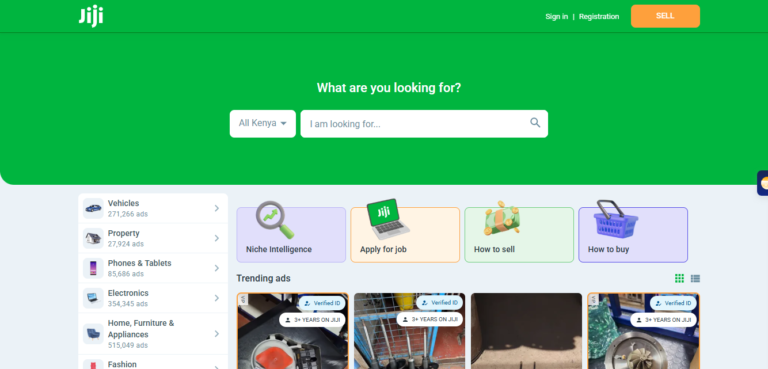
- Jiji Kenya — Classified listings; free to post; great for testing product demand
Pros: Built-in traffic, no marketing needed to start, trusted by Kenyan buyers
Cons: More competition, platform controls your store, fees per sale
Step 5: Set Up Payments to Receive Money
Getting paid in Kenya — both from local and international customers — is easier than many beginners expect.
For Kenyan customers (local store):
- Pesapal — Accepts M-Pesa, Visa, Mastercard; easy Shopify and WooCommerce integration
- DPO Pay — M-Pesa and card payments; widely used by Kenyan ecommerce stores
- Flutterwave — M-Pesa integration; also supports payments from across Africa
- M-Pesa Till/Paybill — Set up an M-Pesa business number for direct payments (free through Safaricom)
For international customers (global store):
- PayPal — Widely used; link to Kenyan bank for withdrawal
- Payoneer — Best for Kenyan sellers receiving USD; withdraw to M-Pesa or bank
- Stripe — Not directly available in Kenya but accessible via Atlas or with a registered US entity
Step 6: Price Your Products for Profit
Pricing strategy is where many Kenyan dropshippers make costly mistakes — either pricing too low (no profit) or too high (no sales).
Simple pricing formula:
Selling Price = Supplier Cost + Shipping Cost + Platform Fees + Desired Profit Margin
Recommended markup for Kenya:
- Budget products (under Ksh 500 cost): Mark up 80–150%
- Mid-range products (Ksh 500–2,000 cost): Mark up 50–80%
- Premium products (above Ksh 2,000 cost): Mark up 30–50%
Example calculation:
| Item | Cost |
|---|---|
| Product cost from AliExpress | Ksh 800 |
| Shipping to Kenya | Ksh 300 |
| Platform fee (5%) | Ksh 55 |
| Target profit | Ksh 600 |
| Your selling price | Ksh 1,755 (~Ksh 1,799) |
Always research what similar products sell for on Jumia and Kilimall before setting your price. You need to be competitive without undercutting your own margins.
Step 7: Market Your Store
A beautiful store with no visitors makes zero sales. Marketing is what separates profitable dropshippers from those who give up.
Free marketing methods:
- Facebook and Instagram pages — Post daily product content, customer testimonials, and promotions
- TikTok Kenya — Short product demo videos drive enormous organic traffic for free
- WhatsApp broadcasts — Build a customer list and send product deals directly
- Facebook Groups — Join Kenyan buy-and-sell groups and post your products
- SEO (Google search) — Write blog posts about your niche so customers find your store organically
Paid marketing methods (once you have budget):
- Facebook and Instagram Ads — Most effective for targeting specific Kenyan demographics; start with Ksh 500–1,000/day
- Google Shopping Ads — Excellent for product-specific searches
- TikTok Ads Kenya — Growing platform with lower ad costs than Facebook currently
Beginner tip: Start with free marketing for your first 30–60 days. Test which products get the most interest organically before spending money on paid ads.
Step 8: Handle Orders, Customer Service, and Returns
Once orders start coming in:
- Forward orders to your supplier immediately (most apps like DSers automate this)
- Send customers a confirmation message with estimated delivery time
- Communicate proactively if there are shipping delays — silence is the fastest way to lose trust
- Have a clear returns policy on your website — even if you plan to negotiate case by case
- Track your orders using the tracking numbers your supplier provides
Building a reputation for good customer service is your most powerful competitive advantage as a small Kenyan dropshipping store.
Read also: Selling Products Online in Kenya
Realistic Earnings: How Much Can Kenyan Dropshippers Make?
| Stage | Timeline | Monthly Revenue | Monthly Profit |
|---|---|---|---|
| Testing and setup | Month 1–2 | Ksh 0 – Ksh 15,000 | Ksh 0 – Ksh 5,000 |
| First consistent sales | Month 3–5 | Ksh 15,000 – Ksh 60,000 | Ksh 5,000 – Ksh 20,000 |
| Growing store | Month 6–9 | Ksh 60,000 – Ksh 150,000 | Ksh 20,000 – Ksh 60,000 |
| Established store | Month 10–18 | Ksh 150,000 – Ksh 500,000 | Ksh 60,000 – Ksh 200,000 |
| Scaled operation | 18+ months | Ksh 500,000+ | Ksh 150,000+ |
Note: Revenue is total sales; profit is after supplier costs, shipping, platform fees, and ads. Margins typically range from 20–40% of revenue depending on niche and efficiency.
Startup Costs: How Much Does It Cost to Start Dropshipping in Kenya?
One of the biggest advantages of dropshipping is the low startup cost compared to traditional business. Here is an honest breakdown:
| Expense | Shopify Route | WooCommerce Route |
|---|---|---|
| Store platform | ~Ksh 3,800/month (Shopify Basic) | Free (WooCommerce plugin) |
| Domain name | ~Ksh 1,500/year | ~Ksh 1,500/year |
| Web hosting | Included in Shopify | ~Ksh 3,000/year (Truehost) |
| Product samples | Ksh 2,000 – Ksh 10,000 | Ksh 2,000 – Ksh 10,000 |
| Payment gateway setup | Free (Pesapal/Flutterwave) | Free |
| Initial marketing | Ksh 2,000 – Ksh 10,000 | Ksh 2,000 – Ksh 10,000 |
| Total to start | ~Ksh 10,000 – Ksh 25,000 | ~Ksh 7,000 – Ksh 15,000 |
This is significantly lower than starting a physical retail business in Kenya, where rent, stock, and setup can easily exceed Ksh 200,000–500,000.
Best Products to Dropship in Kenya in 2026
Based on current Kenyan ecommerce trends and search data, these product categories show strong demand and healthy margins:
High Demand, Low Competition (Best for Beginners)
- Personalized phone cases with Kenyan themes
- Natural hair care products
- Baby feeding and weaning accessories
- Resistance bands and home workout equipment
- Kitchen organizers and storage solutions
High Demand, Higher Competition (Better with Experience)
- General phone accessories (very competitive on Jumia)
- Fashion clothing and shoes
- Bluetooth earphones and speakers
- Smart watches and fitness trackers
Emerging Opportunities in 2026
- Solar-powered gadgets (growing energy access market)
- Eco-friendly and sustainable products (urban Nairobi trend)
- Work-from-home accessories (desk setups, ergonomic tools)
- Pet care products (growing urban pet ownership)
Common Mistakes Kenyan Dropshipping Beginners Make
Mistake 1: Choosing a Niche Based on Personal Interest Only
You might love football memorabilia — but is there enough Kenyan online demand for it to build a business? Always validate demand with data before building a store around a niche.
Mistake 2: Not Testing Products Before Listing
Listing 200 products without ever seeing or touching one is a recipe for disaster. Customer complaints about quality destroy new stores. Order samples first.
Mistake 3: Ignoring Shipping Times
Telling a Kenyan customer their order will arrive in 25–35 days without setting that expectation upfront is a guaranteed dispute. Be transparent about delivery timelines and consider sourcing from suppliers with Kenyan warehouses when possible.
Mistake 4: Underspending on Marketing
Building a beautiful store and waiting for customers to magically appear does not work. Without marketing, there is no traffic. Without traffic, there are no sales. Budget for marketing from Day 1.
Mistake 5: Giving Up After the First Bad Month
Almost every successful Kenyan dropshipping entrepreneur had zero or near-zero sales in Month 1. The learning curve is real. Those who push through the first 90 days are the ones who build profitable stores.
Mistake 6: Ignoring Customer Service
One unresolved complaint on a Kenyan Facebook group or WhatsApp community can damage your brand significantly. Handle every customer concern quickly, professionally, and generously — especially when starting out.
Dropshipping vs Other Online Businesses in Kenya
| Business Model | Startup Cost | Time to First Income | Earning Potential | Complexity |
|---|---|---|---|---|
| Dropshipping | Ksh 7,000–25,000 | 1–3 months | Very High | Medium |
| Freelancing | Free | 2–4 weeks | High | Low–Medium |
| Affiliate marketing | Free | 3–9 months | High | Medium |
| YouTube | Free | 6–18 months | Very High | Medium |
| Data entry | Free | 1–2 weeks | Low–Medium | Low |
| Traditional retail | Ksh 100,000+ | Immediate | High | High |
Dropshipping offers one of the highest earning ceilings among online businesses in Kenya, with startup costs far below traditional retail. The trade-off is a longer ramp-up time and the need to develop marketing and business skills.
Is Dropshipping Legal in Kenya?
Yes — dropshipping is completely legal in Kenya. You are simply acting as a retail intermediary between a supplier and a customer. However, there are important legal considerations as your business grows:
- Business registration: Register your business with the Business Registration Service (BRS Kenya) at brs.go.ke. A sole proprietorship costs Ksh 950 and gives your business legal standing.
- Tax obligations: Once your business earns above the KRA threshold, you are required to file returns. Register for a KRA PIN at itax.kra.go.ke.
- Consumer protection: Kenya’s Consumer Protection Act applies to online sellers. Ensure your store has clear return, refund, and delivery policies.
- Import regulations: If customers complain about customs charges on international shipments, be transparent about potential import duties on your product pages.
FAQ: Dropshipping in Kenya for Beginners
Q1: Can I start dropshipping in Kenya with no money?
You can start with very little — but not completely zero. Minimum realistic startup costs are around Ksh 7,000–10,000 for hosting, a domain, and product samples. Free options like listing on Jumia or using Facebook Marketplace cost nothing but have limitations. Shopify’s free trial lets you build and test a store before paying.
Q2: Which is better for Kenyan dropshippers — Shopify or WooCommerce?
Shopify is easier and faster to set up — ideal for beginners who want to launch quickly. WooCommerce costs less long-term and gives more control, but requires more technical knowledge. If you have Ksh 4,000/month for a platform and want simplicity, choose Shopify. If you want to minimize costs and do not mind a learning curve, choose WooCommerce.
Q3: How do I receive M-Pesa payments for my dropshipping store in Kenya?
Integrate a payment gateway that supports M-Pesa — Pesapal, DPO Pay, and Flutterwave are the most popular for Kenyan ecommerce stores. All three work with both Shopify and WooCommerce. You can also set up an M-Pesa Paybill or Till number through Safaricom for direct payments.
Q4: Where do I find dropshipping suppliers that ship to Kenya?
AliExpress is the most popular starting point — it ships to Kenya and has millions of products. CJDropshipping and Zendrop are good alternatives. For local Kenyan sourcing, explore Eastleigh and Kamukunji wholesale markets in Nairobi, or connect with Guangzhou-based traders through Kenyan importer networks on WhatsApp.
Q5: How long does shipping from AliExpress to Kenya take?
Standard AliExpress shipping to Kenya typically takes 15–30 days. AliExpress Standard Shipping with tracking takes 10–20 days. For faster delivery, look for suppliers offering DHL or FedEx shipping (7–12 days) — though these cost more. Always set clear delivery expectations with your Kenyan customers upfront.
Q6: Do I need to register a company to start dropshipping in Kenya?
You do not need to register immediately to test your idea. However, once you start earning consistently, registering a sole proprietorship (Ksh 950 at BRS Kenya) and getting a KRA PIN is strongly recommended for legal compliance, opening a business bank account, and building long-term credibility with customers and suppliers.
Q7: What is the most profitable dropshipping niche for Kenya in 2026?
Based on current market trends, phone accessories, natural beauty and hair products, baby products, and home organization items offer the best combination of high demand, reasonable margins, and manageable competition for Kenyan beginners in 2026.
Conclusion: Start Your Dropshipping Business in Kenya Today
Dropshipping in Kenya in 2026 is a real, legitimate, and potentially life-changing business opportunity. It is not without challenges — but compared to traditional retail, the barriers to entry are dramatically lower, the risks are manageable, and the upside is significant.
You do not need a shop. You do not need to import containers of stock. You do not need a massive budget. You need a product people want, a store that looks trustworthy, a reliable supplier, and the discipline to market consistently and serve your customers well.
Here is your action plan to start this week:
- Day 1 — Pick your niche using Google Trends and Jumia bestsellers
- Day 2 — Create accounts on AliExpress and CJDropshipping; browse products
- Day 3 — Start your Shopify free trial or set up WooCommerce hosting
- Day 4 — Build your store: add 10–20 products, write descriptions, set prices
- Day 5 — Set up Pesapal or Flutterwave for M-Pesa payment integration
- Day 6 — Create your Facebook page and TikTok account for your store
- Day 7 — Post your first product content and tell your network your store is live
The best time to start was six months ago. The second-best time is today.
Read also: