How to Earn Money Online as a Student in Kenya (2026): Real Methods That Actually Work

If you are a student in Kenya wondering how to earn money online, you are not alone — and you are asking exactly the right question. Between skyrocketing university fees, rising cost of living in campus towns, and HELB loans that barely stretch to the end of the semester, the pressure on Kenyan students to find extra income is very real.
The good news? You have something that most adults trying to start online work do not have — time, energy, a learning brain, and access to institutional internet. With the right approach, a Kenyan university or college student can earn between Ksh 5,000 and Ksh 80,000 per month from online work — without dropping a single unit or missing a class.
This is not a guide full of empty promises. Every method here is realistic, tested, and appropriate for a student’s schedule. Let us get into it.
How Can a Student in Kenya Earn Money Online?
Here is the fast version for those who want to start today:
- Freelance writing and content creation — write articles for blogs and websites
- Microtasks and AI training — complete small tasks on Remotasks and Appen
- Online tutoring — teach what you already know to younger students
- Graphic design — use Canva or Adobe to create designs for clients
- Social media management — manage Instagram and Facebook for local businesses
- Transcription and data entry — convert audio to text for pay
- Affiliate marketing — earn commissions by sharing product links
- Selling digital products — sell notes, templates, or study guides
- Online surveys — earn small amounts in your free time
- Virtual assistance — support business owners with admin tasks
Every single one of these can be done from a phone or laptop, from a hostel room, campus library, or home — and most pay via M-Pesa or PayPal.
Why 2026 Is the Best Year for Kenyan Students to Earn Online
The conditions for student online income in Kenya have never been better:
- Campus Wi-Fi is standard at most Kenyan universities — UoN, JKUAT, Strathmore, KU, Daystar, MKU, and others all provide internet access
- Affordable data bundles from Safaricom and Airtel make mobile work accessible even off-campus
- Global demand for English-speaking remote workers continues growing — Kenyan students are well-positioned
- Ajira Digital Hubs have been established at several Kenyan universities, providing training and workspace for student digital workers
- M-Pesa and Payoneer make payment receipt seamless, regardless of where you bank
- AI tools like ChatGPT, Grammarly, and Canva AI have dramatically lowered the skill barrier for content and design work
Whether you study at a university in Nairobi, a technical college in Eldoret, or a teachers’ college in Kakamega, you can start earning online this week.
Before You Start: 5 Things Every Kenyan Student Needs
You do not need much to begin. But you do need these basics:
1. A Device
- A smartphone is enough to start with microtasks, surveys, and social media management
- A laptop opens up higher-paying work like writing, design, transcription, and virtual assistance
- If you do not own a laptop, use campus computer labs or Ajira Digital Hubs — many are free for students
2. Reliable Internet
- Campus Wi-Fi is your first option — free and fast
- A Safaricom or Airtel data bundle as backup — the 1GB for Ksh 99 daily bundle works for most tasks
- Download work files on fast connections and work offline when possible
3. A Payment Account
- M-Pesa — for local platform payouts
- PayPal — for international platforms (link to your bank or use a family member’s bank account)
- Payoneer — the best option for receiving USD from global freelancing platforms
4. A Professional Email Address
- Create a clean Gmail address like firstname.lastname@gmail.com or firstnamelastname@gmail.com
- Avoid addresses like coolguy2005@gmail.com — they undermine your professional image
5. Time Management
- The biggest threat to student online income is not skill — it is inconsistency
- Block specific hours for online work — even 2 hours daily consistently beats 8 hours once a week
- Use tools like Google Calendar or Notion to balance your class schedule and work hours
Read also: How to Make Money on Instagram in Kenya
Step-by-Step: How to Start Earning Online as a Kenyan Student
Step 1: Pick One Method to Start With
The biggest mistake Kenyan student earners make is trying everything at once and mastering nothing. Pick one method that matches your current skills and interests, and spend 30 days focused on it before adding a second stream.
Decision guide by skill:
| Your Strength | Best Starting Method |
|---|---|
| Good at English / writing | Freelance writing, content creation |
| Patient and detail-oriented | Transcription, data entry, microtasks |
| Good at explaining things | Online tutoring |
| Creative / visual | Graphic design, social media management |
| Social media active | Social media management, affiliate marketing |
| Good at research | Virtual assistance, data research |
| Any skill above beginner level | Fiverr gig creation |
Step 2: Set Up Your Accounts
Before any money can flow, set up the accounts you will need:
- Gmail — professional email for client communication
- PayPal — for international payments (paypal.com)
- Payoneer — for freelancing platforms (payoneer.com)
- Fiverr or Upwork profile — if freelancing is your path
- Remotasks or Appen account — if microtasks is your start
- M-Pesa — your final withdrawal destination
Step 3: Build a Beginner Portfolio
Many student earners get stuck because they have no portfolio. Here is how to solve that:
- For writing: Write 3 sample blog posts on topics you know well and publish them on a free Medium account (medium.com)
- For design: Create 5 sample designs (social media posts, flyers, logos) using Canva and save them as a PDF portfolio
- For tutoring: Record a short 5-minute teaching video on any subject and share via Google Drive link
- For virtual assistance: Create a one-page document listing your skills, tools you know, and your availability
A beginner portfolio does not need to be paid work — it just needs to demonstrate capability.
Step 4: Start Applying or Listing Your Services
- On Fiverr: Create a gig with a clear title, strong description, and portfolio sample
- On Upwork: Write targeted proposals — at least 5 per day in your first week
- On Remotasks or Appen: Complete the onboarding training and start tasks immediately
- For tutoring: Post your services in campus WhatsApp groups, Facebook groups, and on Jiji Kenya
- For social media management: Identify 5 local businesses near campus with weak Instagram pages and send them a pitch message
Step 5: Deliver Quality Work and Get Your First Review
Your first payment and first positive review are your most important milestones. Over-deliver on your first 3–5 clients or tasks. A 5-star review on Fiverr or Upwork is worth more than any marketing you can do.
Step 6: Withdraw to M-Pesa and Reinvest in Growth
Once you have your first earnings:
- Withdraw to PayPal or Payoneer, then to your bank, then to M-Pesa
- Reinvest a small portion — buy a better data bundle, upgrade Canva to Pro if design is your path, or buy a tool that saves you time
- Scale by increasing your rates or adding a second income stream
10 Best Ways to Earn Money Online as a Student in Kenya (2026)
1. Freelance Writing and Content Creation
Why it is perfect for students: Writing is the most accessible freelance skill for Kenyan university students. If you can write a well-structured academic essay, you can write a blog post, product description, or web copy — and get paid for it.
What you will write:
- Blog posts and articles (500–2,000 words)
- Website content and landing pages
- Product descriptions for e-commerce stores
- Social media captions and scripts
- Academic editing and proofreading (not ghostwriting academic papers — check ethical guidelines)
- Newsletter content
Where to find writing clients:
| Platform | Type | Payment | Link |
|---|---|---|---|
| Upwork | Freelance platform | Payoneer/PayPal | upwork.com |
| Fiverr | Gig marketplace | PayPal/Payoneer | fiverr.com |
| ProBlogger Jobs | Job board | Varies | problogger.com/jobs |
| Contently | Content platform | PayPal | contently.com |
| Textbroker | Content mill | PayPal | textbroker.com |
| iWriter | Content mill | PayPal | iwriter.com |
| Kuhustle | Kenyan platform | M-Pesa | kuhustle.com |
Earning potential for student writers:
- Beginner (first 3 months): Ksh 5,000–20,000/month
- Intermediate (3–6 months): Ksh 20,000–60,000/month
- Established (6–12 months): Ksh 60,000–150,000+/month
Kenya student tip: Start with iWriter or Textbroker while you build your portfolio — they accept beginners and pay consistently. Once you have samples and reviews, move to Upwork or direct clients for much higher rates.
2. Online Tutoring (Best for Students Who Excel Academically)
Why it is perfect for students: You are literally surrounded by students who need help with subjects you already understand. Online tutoring lets you monetize your academic knowledge — and it is one of the most respected and legitimate student side hustles in Kenya.
What you can tutor:
- KCPE and KCSE subjects (Mathematics, Sciences, English, Kiswahili)
- University-level subjects in your area of study
- English language to non-native speakers globally
- Professional skills — coding, Excel, accounting, research methods
- Music, art, or sports skills
Where to find tutoring clients:
Local Kenyan students:
- Post in campus and high school WhatsApp groups
- Advertise on Facebook groups like “Nairobi Students” or county-specific groups
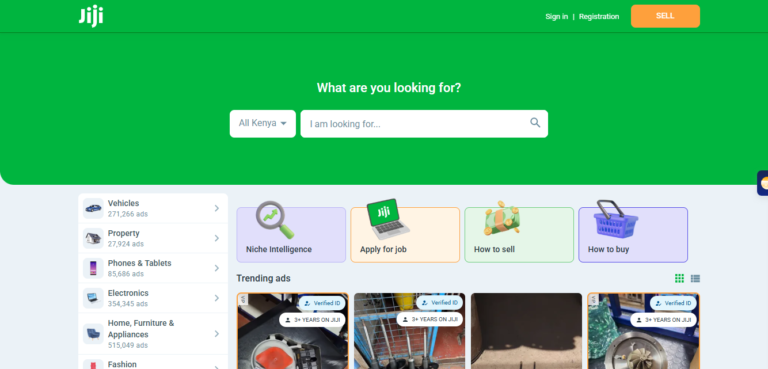
- List on Jiji Kenya under Education / Tutors
- Word of mouth — tell 10 people and ask them to refer you
International online tutoring platforms:
| Platform | Subject Focus | Pay Rate | Link |
|---|---|---|---|
| Preply | Languages, academics | $10–$40/hour | preply.com |
| Italki | English and languages | $8–$30/hour | italki.com |
| Chegg Tutors | STEM subjects | $20–$40/hour | chegg.com/tutors |
| Tutor.com | Broad academic subjects | $10–$25/hour | tutor.com |
| Superprof | All subjects | Set your own rate | superprof.co.ke |
Earning potential:
- Local in-person/online tutoring: Ksh 500–Ksh 2,000/hour
- International platform tutoring: Ksh 1,300–Ksh 5,200/hour (in USD equivalent)
- 10 tutoring hours per week: Ksh 20,000–Ksh 80,000/month
Student success story scenario: A third-year Engineering student at JKUAT who tutors Mathematics and Physics to KCSE students on weekends (Saturday and Sunday, 4 hours each day) at Ksh 1,000/hour earns Ksh 32,000/month without touching their weekday study schedule.
3. Microtasks and AI Data Training (Best for Beginners with No Experience)
Why it is perfect for students: No experience, no portfolio, no special skills required. You can start within 24 hours of signing up, work in short sessions between classes, and get paid weekly.
What you will do:
- Label images for AI training (e.g., “this is a cat,” “this road sign says stop”)
- Transcribe short audio clips
- Categorize data and text
- Validate AI-generated outputs
- Complete search quality rating tasks
Best microtask platforms for Kenyan students:
| Platform | Task Type | Pay Range | Payment | Link |
|---|---|---|---|---|
| Remotasks | AI training, image labeling | Ksh 300–2,500/day | PayPal | remotasks.com |
| Appen | Search rating, data tasks | Ksh 8,000–40,000/month | PayPal | appen.com |
| Clickworker | Data entry, surveys, writing | Ksh 200–1,500/day | PayPal | clickworker.com |
| Amazon MTurk | Micro HITs (varied tasks) | Varies | Gift cards/bank | mturk.com |
| Toloka by Yandex | AI training tasks | Ksh 500–3,000/day | PayPal/Payoneer | toloka.ai |
Earning potential:
- Casual (1–2 hours/day): Ksh 3,000–10,000/month
- Active (3–5 hours/day): Ksh 10,000–40,000/month
Tip: Remotasks has a free “Tasker School” that teaches you the specific skills needed for higher-paying tasks. Complete all training modules before jumping into tasks — trained workers consistently earn more.
4. Graphic Design (Best for Creative Students)
Why it is perfect for students: Graphic design is a skill you can learn in 2–4 weeks using free tools, and Kenyan businesses desperately need affordable design help. Students with even basic Canva skills can find paying clients faster than they expect.
What you can design:
- Social media posts and Stories
- Flyers and posters for events
- Business cards and letterheads
- Logo design (requires more advanced skills)
- Presentation slides
- YouTube thumbnails
- Church bulletins, school magazines, and event programmes
Tools to learn (in order of ease):
- Canva — canva.com — Free. Start here. Learn in 1–2 days.
- Adobe Express — adobe.com/express — Free. More professional than Canva.
- Adobe Illustrator / Photoshop — Paid but available free with student discount via Adobe Creative Cloud for Education
Where to find design clients as a student:
- Campus notice boards and WhatsApp groups (student events need flyers!)
- Local churches, schools, and NGOs near campus
- Fiverr — create a gig for “Canva social media designs”
- Facebook groups for Kenyan businesses and entrepreneurs
- Instagram — post your designs with #KenyanDesigner and #GraphicDesignKenya
Earning potential:
- Per project (flyer, social media set): Ksh 500–Ksh 5,000
- Monthly retainer (managing a business’s social media design): Ksh 5,000–Ksh 20,000
- Fiverr established seller: Ksh 20,000–Ksh 80,000+/month
5. Transcription and Data Entry (Best for Detail-Oriented Students)
Why it is perfect for students: Transcription requires no special skills beyond good listening, fast typing, and attention to detail. Many tasks can be done in 30–60 minute sessions between classes, making it ideal for a busy student schedule.
What transcription involves:
- Listening to audio recordings and typing what is said
- Converting voice interviews, lectures, podcasts, or meetings into text
- Checking and editing AI-generated transcriptions for accuracy
Best transcription platforms for Kenyan students:
| Platform | Pay Per Audio Minute | Payment | Requirements | Link |
|---|---|---|---|---|
| Rev | $0.45–$1.10/minute | PayPal | English test | rev.com |
| TranscribeMe | $15–$22/audio hour | PayPal | Short test | transcribeme.com |
| GoTranscript | $0.60/audio minute | PayPal | Grammar test | gotranscript.com |
| Scribie | $5–$25/audio hour | PayPal | Test transcription | scribie.com |
| Speechpad | $0.25–$2.50/minute | PayPal | Application | speechpad.com |
Earning potential:
- Beginner (slow typist): Ksh 5,000–15,000/month
- Intermediate (fast typist, 70+ WPM): Ksh 15,000–40,000/month
Tip: Practice typing speed at keybr.com — aim for 70+ words per minute to make transcription financially worthwhile. Every 10 WPM increase means more earning per hour.
6. Social Media Management (Best for Students Already Active Online)
Why it is perfect for students: If you spend 3+ hours on social media daily, you already understand how content works. Kenyan businesses are desperately underserved when it comes to professional social media management — and most cannot afford big agencies.
What you will do for clients:
- Create and schedule weekly posts (photos, graphics, captions)
- Respond to comments and DMs on behalf of the business
- Grow their follower base organically
- Write hashtag strategies
- Create monthly performance reports
- Optionally run paid Facebook and Instagram ads
How to get your first client as a student:
- Identify 10 businesses near your campus or in your hometown with weak or inconsistent social media pages
- Take screenshots of specific improvements you would make
- Send a WhatsApp message: “Hi, I noticed your Instagram hasn’t been updated in 3 weeks. I’m a [Course] student at [University] and I manage social media professionally. I’d love to show you what I can do — can I offer you a free week of content?”
- Deliver excellent free work for one week
- Convert to a paid monthly retainer
Earning potential as a student social media manager:
- Small local business (salon, restaurant, shop): Ksh 5,000–15,000/month per client
- Managing 3 small clients: Ksh 15,000–45,000/month
- Mid-size business: Ksh 20,000–50,000/month per client
7. Selling Digital Products (Best for Studious Students)
Why it is perfect for students: Your study notes, past papers summaries, revision guides, and subject expertise have real commercial value to other students — and you have already done the work.
Digital products Kenyan students can create and sell:
- Summarized notes for popular university units (sell to classmates and junior students)
- Past paper solution sets for KCSE or university exams
- Study planners and timetables in PDF or Google Sheets format
- Subject-specific revision guides — especially for hard units like Calculus, Organic Chemistry, Financial Accounting
- CV and cover letter templates for fellow students entering the job market
- Research report templates in Word format
- University application guides — for KUCCPS, scholarships, student visa processes
Where to sell digital products in Kenya:
| Platform | M-Pesa? | Commission | Best For | Link |
|---|---|---|---|---|
| Selar | Yes (direct) | 0–10% | African digital sellers | selar.co |
| Gumroad | Via PayPal | 10% | Global reach | gumroad.com |
| Payhip | Via PayPal | 5% | Simple setup | payhip.com |
| WhatsApp + M-Pesa | Yes (direct) | 0% | Kenyan peer-to-peer | — |
| Campus groups | Via M-Pesa | 0% | Fastest for students | — |
Earning potential:
- Selling summarized notes at Ksh 200 each to 50 students per semester = Ksh 10,000 per semester passively
- A comprehensive revision guide at Ksh 500 with 100 buyers = Ksh 50,000 for something you wrote once
Real scenario: A second-year CPA student creates a “Complete CPA Foundation Notes Bundle” — 6 units, summarized in 20 pages each, with practice questions. Priced at Ksh 800 on Selar.co and promoted in CPA Kenya Facebook groups. With 60 sales per month, that is Ksh 48,000/month from a one-time creation effort.
8. Affiliate Marketing (Best Passive Income for Students)
Why it is perfect for students: Once set up, affiliate marketing earns money even when you are in class, sleeping, or on attachment. It is the closest thing to passive income that a student can realistically build.
How student affiliate marketing works in Kenya:
- Sign up for an affiliate programme (Jumia, Amazon, Hostinger)
- Get your unique referral link
- Share the link where your audience is — WhatsApp groups, Instagram, a blog, Facebook
- When someone clicks and buys, you earn a commission — automatically
Best affiliate programmes for Kenyan students:
| Programme | Commission | What to Promote | Payment | Link |
|---|---|---|---|---|
| Jumia Kenya | 2–11% | Electronics, fashion, beauty | M-Pesa | affiliate.jumia.co.ke |
| Amazon Associates | 1–10% | Books, tech, study tools | PayPal | affiliate-program.amazon.com |
| Hostinger | 60%/sale | Web hosting (for bloggers) | PayPal | hostinger.com/affiliates |
| Selar | 20–50% | Kenyan digital products | M-Pesa | selar.co |
| Bluehost | $65+/referral | Blogging tools | PayPal | bluehost.com/affiliate |
Best channels for student affiliate marketing:
- WhatsApp groups — Share Jumia product links in campus buy-and-sell groups (“This phone is on offer at Jumia today — link in my bio”)
- Instagram Stories and bio link — If you have a niche account
- Campus Facebook groups — Share relevant product recommendations with your affiliate link
- A simple blog — Write “Best laptops for university students in Kenya under Ksh 50,000” and include Jumia affiliate links
Earning potential:
- Casual sharing: Ksh 1,000–5,000/month
- Active blogger + affiliate: Ksh 10,000–80,000+/month
9. Virtual Assistance (Best for Organized, Admin-Oriented Students)
Why it is perfect for students: Many international business owners need help with administrative tasks but cannot afford full-time staff. As a virtual assistant (VA), you provide that help remotely — on a schedule that fits around your lectures.
Common VA tasks:
- Email inbox management and response drafting
- Calendar scheduling and appointment booking
- Data entry and spreadsheet management
- Research tasks (competitor analysis, supplier sourcing)
- Travel booking and logistics coordination
- Customer support chat management
- Social media scheduling using tools like Buffer or Later
Where to find VA work:
| Platform | Client Type | Payment | Link |
|---|---|---|---|
| Upwork | International businesses | Payoneer/PayPal | upwork.com |
| Fiverr | Small business owners | PayPal/Payoneer | fiverr.com |
| Fancy Hands | US-based clients | PayPal | fancyhands.com |
| Time Etc | UK/US clients | PayPal | timeetc.com |
| Professional clients | Negotiated | linkedin.com |
Earning potential:
- Entry-level VA: $5–$12/hour (Ksh 650–Ksh 1,560/hour)
- Experienced VA: $12–$25/hour (Ksh 1,560–Ksh 3,250/hour)
- Working 20 hours/week at $10/hour: ~Ksh 52,000/month
10. Online Surveys (Best for Earning in Spare Minutes)
Why it is perfect for students: Surveys are the lowest-effort online earning method — perfect for filling dead time (waiting for a lecture to start, commuting, study breaks). They will not replace other income streams but are a reliable, low-effort supplement.
Best survey platforms available in Kenya:
| Platform | Earning Rate | Minimum Payout | Payment | Link |
|---|---|---|---|---|
| Swagbucks | Ksh 200–800/day | $25 | PayPal | swagbucks.com |
| Branded Surveys | Ksh 300–1,000/day | $5 | PayPal | brandedsurveys.com |
| Survey Junkie | Ksh 200–600/day | $5 | PayPal | surveyjunkie.com |
| LifePoints | Ksh 200–700/day | Varies | PayPal | lifepointspanel.com |
| Google Opinion Rewards | Ksh 50–300/week | N/A | Play Credits | Google Play Store |
Earning potential: Ksh 3,000–10,000/month for consistent survey takers. Treat this as supplemental income — not a primary strategy.
Honest note: Survey availability for Kenyan users varies by platform and can be inconsistent. Some surveys will screen you out partway through. This is normal — do not rely on surveys alone.
Realistic Monthly Income Scenarios for Kenyan Students
Here are three honest scenarios based on different student situations:
Scenario A: The Busy Student (10 Hours/Week Available)
- Method: Microtasks (Remotasks) + Online Surveys
- Time: 1.5 hours/day on weekdays only
- Monthly earnings: Ksh 8,000–18,000
- Best for: Year 1–2 students with heavy academic load
Scenario B: The Focused Student (20 Hours/Week Available)
- Method: Freelance writing OR tutoring (one focus)
- Time: 3 hours/day, 5 days/week
- Monthly earnings: Ksh 20,000–50,000
- Best for: Students in year 2–3 who have settled into their schedule
Scenario C: The Entrepreneurial Student (30+ Hours/Week)
- Method: Social media management (3 clients) + Affiliate marketing + Digital product sales
- Time: 4–5 hours/day including weekends
- Monthly earnings: Ksh 50,000–120,000
- Best for: Final year or diploma students, or those on a lighter academic load
Part-Time Online Work in Kenya: Quick Earnings Reference Table
| Method | Hours/Day Needed | Beginner Monthly Earnings | Skill Needed |
|---|---|---|---|
| Freelance writing | 2–4 hrs | Ksh 10,000–25,000 | Writing |
| Online tutoring | 1–3 hrs | Ksh 10,000–30,000 | Subject expertise |
| Microtasks | 1–3 hrs | Ksh 5,000–15,000 | None |
| Graphic design | 2–4 hrs | Ksh 8,000–25,000 | Canva basics |
| Transcription | 2–4 hrs | Ksh 8,000–20,000 | Fast typing |
| Social media management | 1–2 hrs | Ksh 10,000–30,000 | Social media savvy |
| Digital product sales | Setup once | Ksh 3,000–20,000 | Subject knowledge |
| Affiliate marketing | 1 hr | Ksh 2,000–15,000 | None |
| Virtual assistance | 2–4 hrs | Ksh 15,000–40,000 | Admin skills |
| Online surveys | 0.5–1 hr | Ksh 2,000–8,000 | None |
Common Mistakes Kenyan Students Make Trying to Earn Online
1. Choosing Quick Money Over Skill Building
Many students are attracted to surveys and microtasks because they pay immediately. While these are fine starting points, they have very limited earning ceilings. If you invest the same time into building a writing or design skill, you will earn 3–10x more within 3 months. Think beyond this semester.
2. Being Inconsistent Because of CATs and Exams
CATs, assignments, and exams are part of student life — not excuses to abandon online work entirely. Communicate with clients in advance about reduced availability during exam periods. Most clients will understand a 1–2 week slowdown far better than sudden disappearance with no explanation.
3. Working for Free Hoping for Exposure
“I will pay you in exposure” is one of the most common lies told to Kenyan student workers. Exposure does not pay your rent or data bills. Your first client can get a discounted rate — not a free rate. Know your worth even as a beginner.
4. Falling for Online Job Scams
Common scams targeting Kenyan students include:
- “Pay Ksh 500 registration fee to access high-paying jobs” — Scam
- “Earn Ksh 3,000 per day typing names at home” — Scam
- “WhatsApp investment groups that double your money” — Scam
- “Data entry job that requires you to buy software first” — Scam
Legitimate platforms are always free to join. You should never pay to work.
5. Neglecting Their Studies
Online income should support your education — not replace it. A degree or diploma is still one of the most valuable long-term investments a Kenyan young person can make. Maintain your GPA while building your online income. The goal is both — not one or the other.
Ajira Digital: Kenya’s Government Support for Student Online Workers
The Ajira Digital Programme by Kenya’s Ministry of ICT has established digital work hubs at universities across Kenya. At these hubs, students get:
- Free digital skills training
- Access to computers and internet
- Mentorship from established digital workers
- Direct connections to online job opportunities
Universities with Ajira Digital Hubs include: University of Nairobi, JKUAT, Moi University, Maseno University, Egerton University, Kenyatta University, and others.
If your campus has an Ajira hub, it is one of the best resources available to you — free training, free workspace, and a community of fellow student online workers.
Visit: ajiradigital.go.ke
FAQ: Earning Money Online as a Student in Kenya
Q1: Can a Kenyan student really earn enough online to cover rent and upkeep?
Yes — but it depends on the method and consistency. A student doing freelance writing or tutoring consistently for 3 hours per day can realistically earn Ksh 20,000–50,000/month — enough to cover rent in most campus towns and significantly reduce financial pressure. It takes 1–3 months to build to that level. Microtasks and surveys alone will not cover rent — they work best as supplemental income while you build a higher-skill stream.
Q2: Which online job pays the most for Kenyan students?
Freelance writing, online tutoring, and virtual assistance consistently offer the highest hourly returns for Kenyan students without prior work experience. Students with technical skills (coding, data analysis) can earn significantly more — $20–$50/hour — on platforms like Upwork. Social media management for multiple clients also scales very well.
Q3: Can I do online work from my phone in Kenya?
Yes — many student-friendly methods work on a smartphone. Microtasks (Remotasks, Toloka), online surveys (Swagbucks, Branded Surveys), affiliate marketing (sharing links on WhatsApp and Instagram), and social media management all work well on Android phones. Writing and transcription are possible on phone but significantly easier and faster on a laptop.
Q4: How do I receive payment as a student with no bank account?
M-Pesa is your solution. You do not need a bank account to receive payments via M-Pesa from local platforms. For international platforms (Remotasks, Upwork, Fiverr), set up a PayPal account — you can receive funds and then use WorldRemit or Sendwave to send from PayPal to your M-Pesa. Alternatively, open a KCB or Equity student bank account (both offer free student accounts) and link it to Payoneer for cleaner payment flow.
Q5: How many hours per week should a student spend on online work?
The recommended range for maintaining good academic performance while earning meaningfully is 10–20 hours per week — roughly 2–3 hours on weekdays and 4–6 hours on weekends. This is enough to earn Ksh 15,000–50,000/month depending on your method. Avoid working more than 25 hours per week during heavy academic semesters.
Q6: Do I need to pay taxes on online income as a Kenyan student?
If your online income is below the KRA tax-free threshold (currently Ksh 24,000/month), you are not required to file income tax. If your earnings exceed this consistently, you should register for a KRA PIN (itax.kra.go.ke) and declare your income. Many students earn below this threshold — but it is good practice to register early and stay compliant as your income grows.
Q7: Is it safe to share my M-Pesa number with online platforms?
Never share your M-Pesa PIN with any platform or person. Your M-Pesa phone number (used to receive payments) is safe to share with verified clients and platforms for payment purposes — just as you would share a bank account number. Always verify the legitimacy of a platform before sharing any personal information.
Conclusion: Your Online Income Journey Starts This Week
There has never been a better time to earn money online as a student in Kenya. The platforms exist, the demand is there, the payment infrastructure works — all that is missing is your decision to start and your commitment to stay consistent.
Here is your action plan for this week:
- Pick one method from this guide that matches your current skills — just one
- Create your professional Gmail and set up your PayPal or Payoneer account
- Build your starter portfolio — 3 writing samples, 5 design pieces, or a 5-minute teaching video
- Sign up on one platform — Fiverr, Remotasks, Preply, or Selar
- Tell 10 people about your new service — classmates, family, friends
- Apply or complete tasks for 1 hour every day for 30 days without stopping
- Receive your first payment — celebrate it, then immediately plan how to double it
You do not need to wait for a job posting on LinkedIn. You do not need to finish your degree first. You do not need your parents’ permission to start building your financial independence.
The Kenyan students earning Ksh 40,000/month online while on campus are not smarter than you. They simply started earlier and stayed consistent longer.
Read also: