Best Blogging Platforms in Kenya: WordPress vs Blogger vs Wix Compared

If you’re trying to figure out the best blogging platforms in Kenya, the short answer is that WordPress (self-hosted) gives you the most control and the best long-term value, Blogger is the easiest free option for absolute beginners, and Wix suits people who want a drag-and-drop builder without touching code. Which one is “best” really depends on your budget, your technical comfort, and what you plan to do with the blog once it starts growing.
This matters more in Kenya than people often realize. Local hosting speed, M-Pesa payment support for domains and hosting, and access to Kenyan-specific themes and plugins can make or break the experience for a new blogger. A platform that works beautifully for someone in the US or UK doesn’t automatically work the same way here, especially once you start thinking about payments, taxes on income, or connecting with a Kenyan audience.
In this guide, we’ll walk through the major platforms available to Kenyan bloggers, compare their real costs in shillings, look at where each one shines and where it falls short, and help you match a platform to your specific goals — whether that’s a personal journal, a niche authority site, or a blog you eventually want to monetize.
Quick Answer: What Is the Best Blogging Platform in Kenya?
For most serious bloggers in Kenya, self-hosted WordPress.org paired with a local Kenyan hosting provider is the best overall choice. It’s free to use, works with M-Pesa-friendly hosts, gives you full ownership of your content, and has the widest range of themes, plugins, and monetization options. Blogger is the best free alternative for total beginners, while Wix suits users who prioritize simplicity over flexibility.
What to Look for in a Blogging Platform in Kenya
Before comparing specific platforms, it helps to know what actually matters for someone blogging from Kenya, as opposed to generic “best blogging platform” advice written for a global audience.
- Local payment support. Can you pay for hosting, domains, and plugins using M-Pesa, or are you stuck with a Visa/Mastercard and forex conversion fees?
- Server location and speed. A site hosted in the US or Europe can feel noticeably slower for Kenyan visitors than one hosted locally or on a CDN with an African presence.
- Domain extension options. Do you want a
.comfor global reach, or a.co.ke/.kedomain, which signals local trust and can help with local search visibility? - Ease of use versus your technical skill. Some platforms need no technical knowledge at all; others reward people willing to learn a little.
- Monetization support. Can the platform run Google AdSense, affiliate links, sponsored posts, or your own digital products without restrictions?
- Ownership and portability. If you ever want to switch hosts or platforms, can you export your content, or are you locked in?
- Ongoing cost. Not just the launch price, but renewal costs a year or two down the line, which is where many beginners get caught off guard.
Best Blogging Platforms in Kenya: Quick Comparison
| Platform | Best For | Starting Cost (approx.) | M-Pesa Friendly | Ease of Use | Ownership |
|---|---|---|---|---|---|
| WordPress.org (self-hosted) | Serious/long-term bloggers, monetization | ~KSh 2,500–10,000/year (hosting) + domain | Yes, via local hosts | Moderate | Full ownership |
| WordPress.com | Bloggers who want WordPress without managing hosting | Free plan, or roughly KSh 500–1,200/month on paid tiers | Limited (mostly card/PayPal) | Easy | Partial, depends on plan |
| Blogger (Blogspot) | Absolute beginners, hobby blogs | Free | Not needed | Very easy | Limited (Google-owned platform) |
| Wix | Visual builders, portfolio-style blogs | Roughly KSh 2,200–3,800/month on paid plans | Not directly; card/PayPal | Very easy | Limited, tied to Wix |
| Medium | Writers who want built-in readership, no setup | Free (Partner Program optional) | N/A | Very easy | None (Medium owns the platform) |
Prices above are estimates based on published rates as of mid-2026 and can change, so always check current pricing directly with the provider before committing.
1. WordPress.org (Self-Hosted) — Best Overall for Kenyan Bloggers
When people in the blogging and SEO community talk about “WordPress” as the best platform, they usually mean WordPress.org — the free, open-source software you install on your own hosting account, not WordPress.com.
This is the platform behind a large share of the world’s blogs and websites, precisely because it’s free to use and endlessly customizable through themes and plugins.
How it works in Kenya
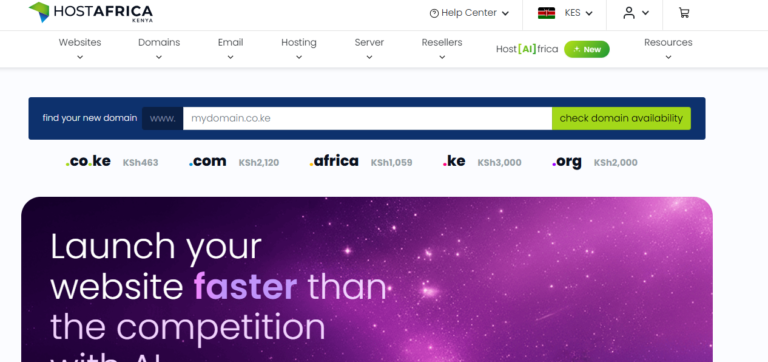
You buy a domain name and a hosting plan separately, then install WordPress (most Kenyan hosts offer one-click WordPress installation). Providers like Truehost, NovaHost, HostPinnacle, and others cater specifically to the Kenyan market with local servers, cPanel access, and M-Pesa payment options.
Costs to expect
- Domain name: A
.co.kedomain typically costs somewhere in the KSh 999–1,500 range for the first year, with renewals often landing between KSh 1,200 and KSh 2,500, depending on the registrar. A.comdomain usually costs a comparable amount or slightly more. - Hosting: Entry-level shared hosting from Kenyan providers generally starts around KSh 2,000–3,500 per year on promotional or longer billing terms, with more robust plans running higher. Always check the renewal price, not just the first-year promo price.
- Themes and plugins: Thousands of free options exist. Premium themes or plugins (for advanced SEO, page builders, or e-commerce) can add anywhere from a few thousand shillings to significantly more, depending on what you choose.
Strengths
- Full ownership of your content and data — nobody can shut down your blog or change the rules on you overnight.
- The largest plugin ecosystem of any platform, covering SEO, security, forms, e-commerce, and more.
- Works well with Kenyan hosting providers that accept M-Pesa and host data closer to home for faster load times.
- No restrictions on how you monetize — AdSense, affiliate marketing, sponsored content, digital products, or your own online store are all fair game.
- A skill that’s genuinely useful beyond blogging, since WordPress knowledge transfers to freelance web design work.
Drawbacks
- You’re responsible for your own backups, security updates, and troubleshooting, unless you pay for managed hosting.
- There’s a learning curve, though it’s smaller than it used to be thanks to page builders like Elementor.
- Costs add up if you rely heavily on premium plugins and themes.
Who it’s best for: Bloggers who plan to treat this as a long-term project, want full control, and are comfortable investing a small amount upfront in exchange for flexibility later.
2. WordPress.com — WordPress Without Managing Hosting
WordPress.com is a separate, hosted service run by Automattic. It uses the same underlying WordPress software but handles hosting for you, which removes some technical burden at the cost of flexibility.
Plans and pricing
WordPress.com offers a free plan with significant limitations (no custom domain, ads on your site, no plugin installation), and several paid tiers. As of mid-2026, published pricing runs roughly from an entry-level Personal plan (around $4/month billed annually, closer to $9/month billed monthly) up through Premium, Business, and Commerce tiers that unlock custom plugins, advanced design tools, and e-commerce features. At current exchange rates (roughly KSh 129–130 to the US dollar), that translates to somewhere in the range of KSh 500 to well over KSh 5,000 per month depending on the tier, so it’s worth converting the exact plan price before you commit.
Payment consideration for Kenyan bloggers
WordPress.com’s checkout is built around international card payments and PayPal rather than M-Pesa, which is a real friction point for many Kenyan users. You’ll typically need a Visa or Mastercard-enabled account, whether that’s a bank card or a virtual card service.
Strengths
- No server management, security patching, or backups to worry about.
- Familiar WordPress editing experience.
- Reasonably good starting point if you want to test blogging before committing to self-hosting.
Drawbacks
- Lower-tier plans block plugin installation, which limits SEO tools, forms, and monetization options.
- Not naturally M-Pesa friendly.
- More expensive over time than self-hosted WordPress once you add up several years of subscription fees.
Who it’s best for: People who want the WordPress editing experience without dealing with hosting, and who have a card or PayPal to pay with.
3. Blogger (Blogspot) — The Free Starting Point
Blogger is Google’s free blogging platform, and it remains one of the simplest ways for a Kenyan blogger to get a site online in minutes, at zero cost.
How it works
You sign in with a Google account, choose a template, and start publishing on a free blogspot.com subdomain. You can later connect a custom domain if you buy one separately.
Costs to expect
Blogger itself is completely free, including hosting through Google’s infrastructure. Your only cost, if you choose to have one, is a custom domain (roughly KSh 1,000–1,500/year for a .co.ke, or a similar range for a .com).
Strengths
- Genuinely free, with no hidden hosting costs.
- Backed by Google’s infrastructure, so uptime and load speed are generally solid.
- Very simple to set up — no coding, no server configuration.
- Straightforward to connect Google AdSense, since both are Google products.
Drawbacks
- Design and customization options are limited compared to WordPress.
- Fewer built-in SEO tools, and no plugin ecosystem to extend functionality.
- The platform hasn’t received major feature updates in years, and some bloggers worry about long-term support, since Google has discontinued other products in the past.
- Content lives on Google’s platform, so you have less control than with self-hosted WordPress, even with a custom domain attached.
Who it’s best for: Absolute beginners who want to start writing immediately at no cost, hobbyists, or anyone testing whether they’ll actually stick with blogging before investing money.
4. Wix — The Visual, Drag-and-Drop Option
Wix is a website builder that also supports blogging, popular for its visual, drag-and-drop editor that doesn’t require any coding knowledge.
Plans and pricing
Wix’s paid plans in 2026 generally start around $17/month for a basic plan without e-commerce, moving up to roughly $29/month for a plan with online store and marketing tools, with higher tiers going well beyond that for larger businesses. Converted at current rates, that’s approximately KSh 2,200–3,800+ per month for the lower and mid-tier plans. A free plan exists but comes with Wix branding and a Wix subdomain rather than your own domain.
Payment consideration for Kenyan bloggers
Like WordPress.com, Wix’s checkout is generally built around card payments rather than M-Pesa, so you’ll need an internationally enabled card.
Strengths
- Extremely beginner-friendly, visual editor — genuinely no coding required.
- Attractive, professionally designed templates out of the box.
- Good for bloggers who also want a polished portfolio, small e-commerce store, or booking system alongside their blog content.
Drawbacks
- More expensive over time than self-hosted WordPress for equivalent features.
- Harder to migrate away from later — Wix sites aren’t as portable as WordPress content.
- Blogging tools are decent but not as deep or SEO-focused as WordPress’s blogging-specific plugins.
- Not naturally M-Pesa friendly for payment.
Who it’s best for: People who care more about visual design and simplicity than long-term flexibility, and who are comfortable paying monthly in a foreign currency.
Read also: How to Make Money on PrizeRebel: The Complete 2026 Guide
Other Blogging Websites in Kenya Worth Knowing About
While WordPress, Blogger, and Wix cover most needs, a few other platforms come up often enough to mention.
- Medium — A writing-focused platform with a built-in audience and no setup required. Good for essays and thought pieces, but you don’t own the platform or control monetization the way you would on your own site.
- Substack — Built specifically for newsletter-style blogging with optional paid subscriptions. Payment processing is handled through Stripe, which has limited direct support for Kenyan payouts, so this is more useful for reach than for local monetization right now.
- Squarespace — Similar positioning to Wix: visually polished, beginner-friendly, priced in US dollars, and less flexible than self-hosted WordPress.
- Local website builders — Some Kenyan hosting companies, including Truehost and others, offer their own simplified website/blog builders bundled with hosting, which can be worth considering if you want an all-in-one local solution with M-Pesa billing throughout.
WordPress vs Blogger vs Wix in Kenya: Which Should You Actually Choose?
| Factor | WordPress (self-hosted) | Blogger | Wix |
|---|---|---|---|
| Upfront cost | Low (domain + hosting) | Free | Free plan, or ~KSh 2,200+/month paid |
| M-Pesa support | Yes, via local hosts | Not needed (free) | Generally no |
| Customization | Extensive | Limited | Moderate |
| SEO capability | Excellent, with plugins like Yoast or Rank Math | Basic | Decent, built-in tools |
| Long-term cost | Lower over several years | Free, plus optional domain | Higher over several years |
| Monetization flexibility | Full flexibility | Good for AdSense specifically | Moderate |
| Skill required | Moderate | Minimal | Minimal |
| Content ownership | Full | Partial | Partial |
Quick takeaway: If you’re unsure and want a one-line recommendation, start with self-hosted WordPress on a Kenyan hosting provider if you’re serious about blogging long-term. Start with Blogger if you want to test the waters for free first.
How Much Does It Cost to Start a Blog in Kenya?
A realistic budget for a new blogger in Kenya, using self-hosted WordPress, looks something like this:
- Domain name (
.co.keor.com): roughly KSh 1,000–1,500 for the first year - Shared hosting: roughly KSh 2,000–3,500 for the first year on an entry-level plan
- Total to launch: often somewhere around KSh 3,000–5,000 for the first year, before any optional premium themes or plugins
If you go the Blogger route, your only real cost is an optional custom domain, so you can technically start for free.
It’s worth budgeting a bit more for year two and beyond, since promotional first-year pricing on domains and hosting is common, and renewal rates are often noticeably higher. Always check the renewal price before you buy, not just the headline first-year offer.
Caution: Watch out for hosting or domain providers that advertise an extremely low first-year price but jump sharply at renewal. Read the fine print, and prefer providers that are transparent about year-two pricing from the start.
How to Choose the Best Blogging Platform for Your Goals
Different goals call for different platforms. Here’s a practical way to think about it.
- If you want to test whether you enjoy blogging before spending money: Start with Blogger or WordPress.com’s free plan.
- If you’re building a niche blog you hope to monetize seriously (ads, affiliate marketing, digital products): Go with self-hosted WordPress from the start. Migrating later is possible but adds unnecessary friction.
- If you want a visually striking portfolio-style blog and don’t mind a monthly fee in dollars: Wix is a reasonable fit.
- If you’re a business adding a blog to an existing company website: Self-hosted WordPress or your existing website’s CMS is usually more coherent than running a separate platform.
- If you write personal essays and want an existing audience without any setup: Medium is worth trying alongside your main site, not necessarily instead of it.
Step-by-Step: How to Start a WordPress Blog in Kenya
- Choose and register a domain name. Pick something short, memorable, and relevant to your niche. Decide between a
.comfor broader international reach or a.co.ke/.kedomain if local trust and Kenyan search visibility matter more to you. - Choose a Kenyan-friendly hosting provider. Look for M-Pesa payment support, cPanel access, SSD storage, free SSL, and daily backups. Compare renewal pricing, not just first-year promotions.
- Install WordPress. Most Kenyan hosts offer a one-click WordPress installer inside their control panel, so this typically takes a few minutes.
- Pick a theme. Start with a free, well-reviewed theme rather than paying for a premium one right away. You can always upgrade once you know your niche and design needs better.
- Install essential plugins. At minimum, consider an SEO plugin (Yoast SEO or Rank Math), a security plugin, and a caching plugin for speed.
- Set up your site structure. Create your core pages (About, Contact) and decide on your main content categories before you start publishing.
- Publish your first few posts. Aim for genuinely useful, well-researched content rather than rushing to publish something thin just to have a post live.
- Set up analytics and search tools. Connect Google Analytics and Google Search Console so you can track what’s working from day one.
Common Mistakes Kenyan Bloggers Make When Choosing a Platform
- Choosing based on price alone, ignoring long-term flexibility. The cheapest option today can become the most limiting option in a year.
- Not checking renewal prices before signing up. Promotional first-year pricing can be misleading if renewal costs triple.
- Picking an international platform without checking M-Pesa or payment compatibility. This can create unnecessary friction every time you need to pay for hosting or upgrades.
- Overinvesting in premium themes and plugins too early. It’s usually better to start simple and upgrade once you understand what your blog actually needs.
- Underestimating the importance of page speed for Kenyan visitors. A site hosted far from East Africa, or on an overloaded shared server, can feel slow even if it performs fine in the provider’s marketing screenshots. Test load speed yourself before committing long-term.
- Assuming a free platform means no long-term cost. Free platforms often mean less control, more restrictions, and sometimes advertising you can’t remove or control.
Monetization Considerations by Platform
If earning income from your blog is part of the plan, it’s worth understanding how each platform affects that path. Results always depend on factors like your niche, content quality, consistency, and competition — no platform guarantees traffic or income on its own.
- Self-hosted WordPress gives you the most freedom: Google AdSense, affiliate marketing, sponsored posts, selling digital products, or running your own online store are all possible without platform restrictions.
- Blogger works well specifically with Google AdSense, since both are Google products, but has fewer built-in tools for other monetization methods like memberships or digital downloads.
- WordPress.com restricts monetization tools on lower-tier plans; you generally need to upgrade to a paid tier that allows plugins before you can run most monetization methods.
- Wix supports ads and its own e-commerce tools on higher-tier plans, but affiliate marketing and ad monetization setups are less flexible than on self-hosted WordPress.
Whichever platform you choose, remember that meaningful blog income in Kenya, as anywhere else, tends to come from consistent, genuinely useful content built over months or years, not from the platform choice itself.
Frequently Asked Questions
1. What is the best free blogging platform in Kenya? Blogger (Blogspot) is generally the best fully free option, since hosting is included at no cost through Google. WordPress.com also has a free tier, though it’s more limited in customization and doesn’t allow a custom domain unless you upgrade.
2. Is WordPress free to use in Kenya? The WordPress.org software itself is free and open-source. You’ll still need to pay separately for a domain name and hosting, which together usually cost a few thousand shillings per year with a Kenyan provider.
3. Can I pay for hosting and domains using M-Pesa in Kenya? Yes. Most Kenyan hosting and domain providers, including several KENIC-accredited registrars, accept M-Pesa directly, which avoids the forex conversion fees you’d face using an international platform that only accepts cards.
4. Should I choose a .co.ke or a .com domain for my blog? A .co.ke or .ke domain signals local trust to Kenyan readers and can help with local search relevance, while a .com domain has broader international recognition. If your audience is mostly Kenyan, .co.ke is a solid choice; if you’re targeting a global audience, .com is usually preferred.
5. Is Blogger still relevant in 2026? Yes, Blogger is still operational and free to use, and it remains a reasonable starting point for beginners. However, it hasn’t seen major feature updates in years, so many bloggers eventually migrate to self-hosted WordPress once they’re ready to invest in their blog more seriously.
6. Which blogging platform is best for making money in Kenya? Self-hosted WordPress generally offers the most monetization flexibility, since it supports AdSense, affiliate marketing, sponsored content, and your own products or store without platform restrictions. That said, income depends heavily on niche, effort, and consistency, not just the platform.
7. Do I need coding skills to start a blog in Kenya? No. Platforms like Blogger and Wix require no coding at all, and modern WordPress page builders like Elementor make it possible to build a professional-looking WordPress site without writing code either.
8. How much does it cost to start a blog in Kenya? A realistic starting budget for self-hosted WordPress is roughly KSh 3,000–5,000 for the first year, covering a domain and entry-level hosting. Blogger can be started for free if you’re willing to use a blogspot.com subdomain instead of a custom domain.
9. Can I switch from Blogger or Wix to WordPress later? Yes, migration is possible from both, though it takes more effort from Wix, since Wix content isn’t as portable. Blogger content can usually be exported and imported into WordPress with reasonable ease using built-in import tools.
10. Is Wix a good choice for Kenyan bloggers? Wix works well if you value a highly visual, drag-and-drop design experience and don’t mind paying a recurring fee in US dollars, since its checkout isn’t naturally set up for M-Pesa. For pure blogging with lower long-term costs, self-hosted WordPress is usually a better fit.
11. What is the difference between WordPress.com and WordPress.org? WordPress.org is the free, self-hosted software you install on your own hosting account, giving you full control and access to all plugins. WordPress.com is a hosted service that manages the technical side for you but restricts plugin access and customization on its lower-tier plans.
12. Which platform loads fastest for visitors in Kenya? Load speed depends more on where your site is hosted and how well it’s optimized than on the platform itself. Self-hosted WordPress on a Kenyan or well-optimized host, combined with a CDN, tends to perform very well for local visitors; the same applies to a well-configured Blogger or Wix site, though you have less control over server location with those options.
Final Thoughts
Choosing among the best blogging platforms in Kenya really comes down to matching the platform to your goals rather than chasing whichever option looks trendiest. If you’re serious about building something long-term, whether that’s a personal brand, a niche authority site, or eventually an income-generating blog, self-hosted WordPress with a Kenyan, M-Pesa-friendly host gives you the strongest foundation. If you just want to start writing today without spending anything, Blogger remains a genuinely solid free starting point, and there’s nothing wrong with beginning there before migrating later.
Whichever platform you land on, the platform itself will matter far less over time than the consistency and usefulness of what you publish. Pick the option that removes the most friction for you right now, register your domain, and start writing your first post.
Read also: